Using Non-Competition Clauses to Protect Business Interests
In a competitive business environment, it’s essential to safeguard your company’s interests. One effective method is to use non-competition clauses in employment contracts. These clauses help prevent former employees from engaging in activities that could harm your business. This guide will explore the critical aspects of non-competition clauses, how to implement them effectively, and why they are crucial for protecting your business interests in Indonesia. Using a well-drafted Non-Compete Agreement can help ensure that your business is protected.
What is a Non-Competition Clause?
A non-competition clause is a provision in an employment contract that restricts an employee from engaging in activities that compete with the employer’s business during or after their employment period. This clause aims to prevent the misuse of confidential information, trade secrets, and proprietary knowledge that employees may acquire during their tenure.
Key Elements of a Non-Competition Clause
When drafting a non-competition clause, several key elements need to be considered:
1. Scope of Restriction: Clearly define the type of activities the employee is restricted from engaging in. This could include working for a competitor, starting a competing business, or soliciting clients.
2. Geographic Limitations: Specify the geographical area where the non-competition clause will apply. This could range from a specific city to an entire country, depending on the nature of the business.
3. Duration: Establish the time frame during which the non-competition clause will be in effect. Typically, this duration ranges from six months to two years after the termination of employment.
4. Compensation: Consider providing compensation to the employee for agreeing to the non-competition clause, especially if it significantly limits their future employment opportunities.
5. Legal Enforceability: Ensure that the non-competition clause complies with Indonesian law and that it is enforceable in the jurisdiction where it will be applied.
6. Confidentiality Agreements: Pairing the non-competition clause with a Confidentiality Agreement ensures that sensitive business information remains protected even after the employee leaves the company.
Legal Considerations for Non-Competition Clauses in Indonesia
In Indonesia, the enforceability of non-competition clauses can be complex. Courts will consider several factors, including the reasonableness of the clause in terms of duration, geographic scope, and the employee’s role within the company. It is essential to draft these clauses carefully to avoid challenges in court.
1. Reasonableness: The clause must be reasonable in scope and duration. Overly broad clauses that unreasonably restrict an employee’s ability to work may be deemed unenforceable.
2. Balance of Interests: Indonesian courts will balance the employer’s need to protect its business with the employee’s right to seek gainful employment. A well-drafted clause that considers both parties’ interests is more likely to be upheld.
3. Local Jurisdiction: Ensure that the clause complies with Indonesian employment laws and is enforceable in local courts.
Pairing the non-competition clause with other relevant agreements, such as a Employment Contract and Intellectual Property Agreement, can provide a comprehensive legal framework to protect your business.
 Word Document (.docx)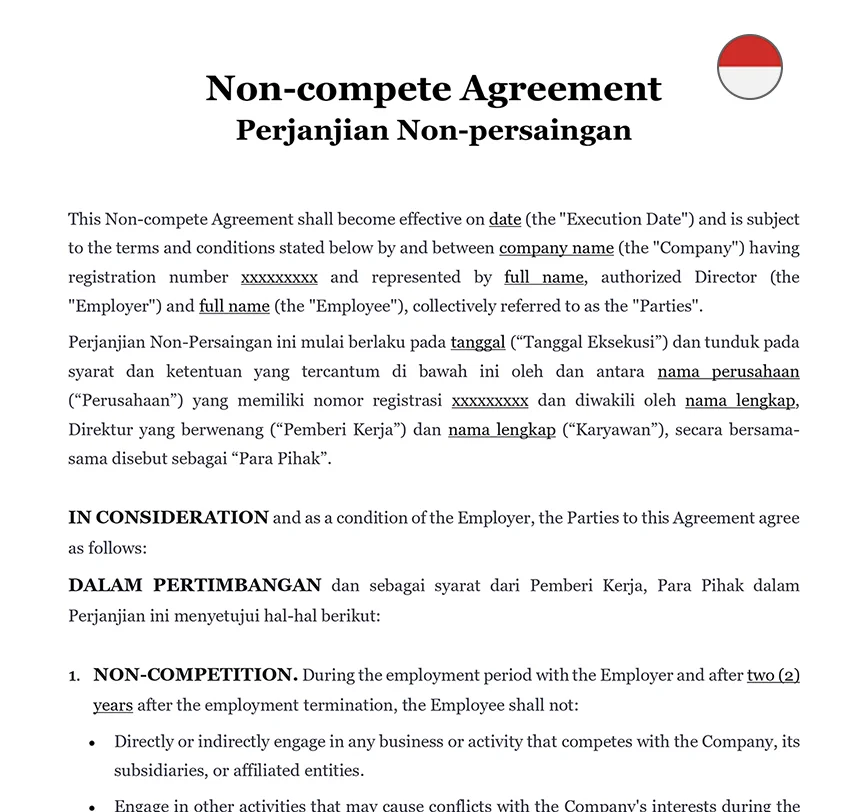
Final Thoughts on Non-Competition Clauses
Incorporating non-competition clauses into your employment agreements is essential for protecting your business interests in Indonesia. Ensure that these clauses are clearly defined, reasonable in scope, and compliant with local laws. Utilize our Non-Compete Agreement template to safeguard your business and maintain a competitive edge. Consider seeking professional legal advice to review and tailor these clauses to your specific needs.
Drafting and Reviewing Non-Competition Clauses
Drafting an effective non-competition clause requires careful consideration of various factors, including the nature of your business, the role of the employee, and legal enforceability. A well-drafted Non-Compete Agreement can protect your business from potential threats posed by former employees working with competitors. Additionally, reviewing the clause with a legal expert ensures that it aligns with Indonesian employment laws and adequately protects your business interests.
Completing Your Non-Compete Agreement
Successfully implementing a non-compete agreement involves not only drafting the clause but also ensuring that it is understood and agreed upon by the employee. Ensure that all necessary documents, including the Non-Compete Agreement and Confidentiality Agreement, are accurately prepared and reviewed. By taking these steps, you can confidently protect your business interests in Indonesia.
Ask your question and receive legal advice from a qualified lawyer
310 client reviews (4.8/5) ⭐⭐⭐⭐⭐