Drafting Cookie Policies for Websites and Apps
Creating a comprehensive cookie policy is crucial for ensuring compliance with data protection regulations and maintaining the trust of your users. In Indonesia, businesses operating websites or apps must provide clear information about the use of cookies and obtain user consent. This blog post outlines the essential components of a cookie policy and offers guidance on how to implement it effectively. Utilizing a detailed cookie policy template can help simplify this process and ensure that your business remains compliant with the law.
Key Elements of a Comprehensive Cookie Policy
1. Explanation of Cookies: Begin your policy with a clear explanation of what cookies are, how they function, and why they are used on your website or app. This helps users understand the importance of cookies and how they impact their browsing experience.
2. Types of Cookies Used: List the different types of cookies used by your site or app, such as essential cookies, performance cookies, functionality cookies, and targeting cookies. Explain the purpose of each type and how they contribute to the website’s functionality.
3. Data Collected: Provide details about the specific data that cookies collect, such as IP addresses, browsing behavior, and user preferences. Make sure to clarify how this data is used and stored.
4. Third-Party Cookies: If your website or app uses third-party cookies, include information about the third parties involved, the type of data collected, and how it is used. This transparency is crucial for maintaining user trust.
5. User Consent: Explain how users can give or withdraw consent for cookie usage. This typically involves implementing a cookie banner or pop-up that allows users to manage their preferences.
6. Managing Cookies: Provide instructions on how users can manage or delete cookies through their browser settings. Include links to guides for popular browsers like Chrome, Firefox, and Safari.
7. Changes to the Policy: Inform users that your cookie policy may be updated from time to time and explain how they will be notified of any changes. Ensure that the most recent version of the policy is always accessible.
Legal Considerations for Cookie Policies in Indonesia
When drafting a cookie policy for your website or app in Indonesia, there are several legal considerations you must take into account:
| Compliance with Data Protection Laws: Ensure that your cookie policy complies with Indonesia’s data protection laws, including obtaining explicit user consent for non-essential cookies. |
| Transparency: Your policy must be transparent about how cookies are used and what data is collected. This includes providing clear information on how user data is stored, processed, and shared. |
| User Control: Users must have the ability to control cookie settings and withdraw their consent at any time. Implementing an easy-to-use cookie management tool is essential. |
| Language and Accessibility: The cookie policy should be available in Bahasa Indonesia and be easily accessible on your website or app, ensuring that all users can understand and manage their privacy settings. |
| Retention Period: Specify how long cookies will remain on a user’s device and ensure that this information is communicated clearly in your policy. |
 Word Document (.docx)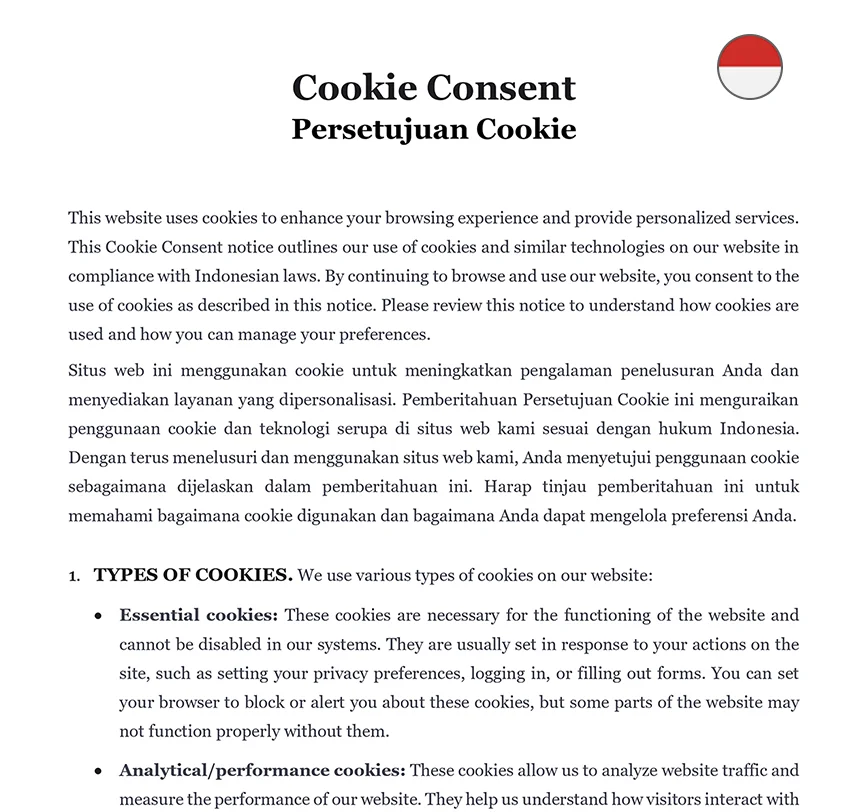
Final Thoughts on Crafting Cookie Policies for Websites and Apps
Creating an effective cookie policy is essential for compliance with Indonesian data protection laws and for building trust with your users. By using a well-structured cookie policy template and adhering to the outlined legal requirements, you can ensure that your website or app operates transparently and within the law.
Drafting and Reviewing Cookie Policies
Drafting a comprehensive cookie policy is a critical step in ensuring your website or app complies with legal standards. The policy should clearly outline all aspects of cookie usage, including the types of cookies used, data collected, and how user consent is obtained. Utilizing a cookie policy template can help ensure that all necessary legal elements are covered. Additionally, having the policy reviewed by a legal expert specializing in Indonesian law can help ensure that it meets all legal requirements and protects both your business and its users.
Implementing Your Cookie Policy
Successfully implementing a cookie policy in Indonesia involves careful preparation and adherence to legal standards. Ensure that all necessary elements, including the cookie policy and other related privacy documents, are accurately prepared and reviewed. Working with experienced professionals and ensuring compliance with all legal requirements will facilitate a smooth implementation process. By taking these steps, you can confidently move forward with your website or app operations in Indonesia, knowing that all legal aspects have been carefully addressed.
Ask your question and receive legal advice from a qualified lawyer
310 client reviews (4.8/5) ⭐⭐⭐⭐⭐