Managing Employee Misconduct: Guidelines for Indonesia
Addressing employee misconduct effectively is crucial for maintaining a healthy work environment and upholding company standards. In Indonesia, employers must follow specific guidelines when managing misconduct to ensure compliance with local labor laws. This article outlines key steps for handling employee misconduct, providing insights into best practices and legal considerations. Utilizing a comprehensive Employee Warning Letter can help formalize the process and protect your organization.
Understanding Employee Misconduct in Indonesia
Employee misconduct can take various forms, from minor infractions like tardiness to serious violations such as harassment or theft. Understanding the nature and severity of the misconduct is the first step in addressing it appropriately. It’s important to categorize misconduct into different levels to determine the appropriate disciplinary action.
1. Verbal and Written Warnings: For minor offenses, such as lateness or unprofessional behavior, a verbal warning may suffice. However, if the behavior persists, issuing a formal Employee Warning Letter is recommended to document the misconduct and the corrective measures required.
2. Suspension: In cases of more severe misconduct, such as insubordination or breaches of company policy, suspension without pay may be necessary. This step should be clearly outlined in the employee handbook and employment contract.
3. Termination: For gross misconduct, such as theft, violence, or serious breaches of trust, immediate termination may be warranted. However, employers must ensure that the decision is well-documented and complies with Indonesian labor laws.
Legal Considerations for Managing Misconduct in Indonesia
When managing employee misconduct in Indonesia, several legal considerations must be taken into account:
| Documentation: It is crucial to document all instances of misconduct and the corresponding actions taken. This includes maintaining records of verbal warnings, written warnings, and any meetings or discussions with the employee. |
| Employee’s Right to Respond: Indonesian labor laws require that employees be given the opportunity to respond to any allegations of misconduct. This process should be fair and transparent, with the employee’s response documented. |
| Proportionality of Disciplinary Action: The disciplinary action taken must be proportionate to the severity of the misconduct. Employers should avoid overly harsh penalties for minor infractions, as this could lead to legal challenges. |
| Compliance with Labor Laws: Employers must ensure that all actions taken in response to misconduct comply with Indonesian labor laws. This includes adhering to notice periods, severance pay requirements, and any other legal obligations. |
| Confidentiality: Maintaining confidentiality throughout the process is essential to protect the privacy of the employee and the integrity of the investigation. |
 Word Document (.docx)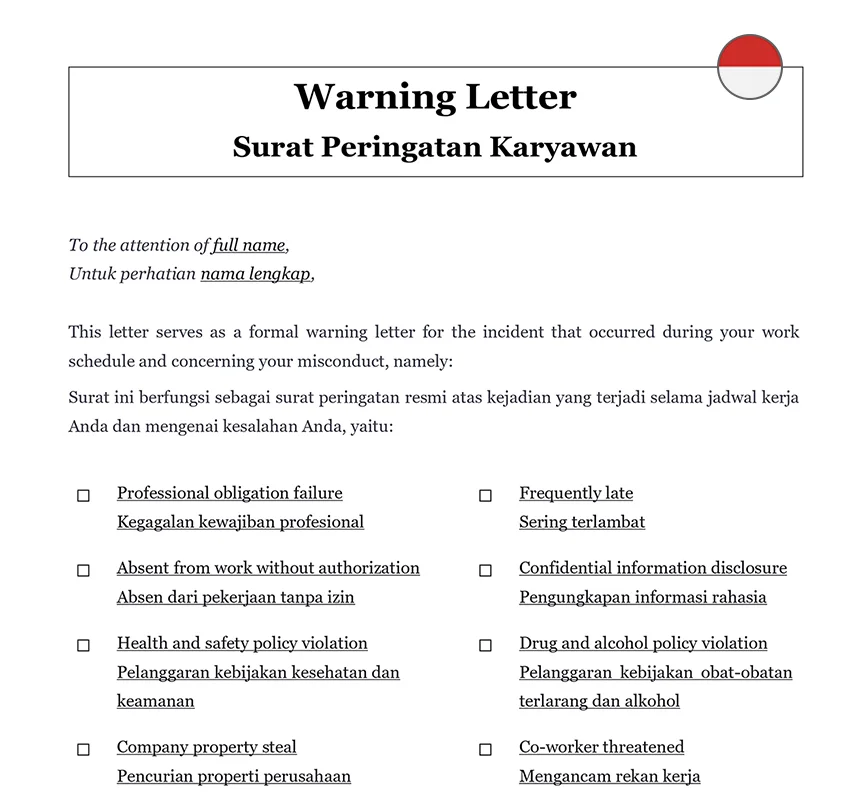
Final Thoughts on Managing Employee Misconduct in Indonesia
Effectively managing employee misconduct is essential for maintaining a productive and harmonious workplace. By following proper procedures and using tools like an employee warning letter, employers can address issues promptly and fairly. Ensure that all actions comply with Indonesian labor laws and seek legal advice if necessary to protect your organization.
Drafting and Reviewing Employee Warning Letters
Drafting an effective employee warning letter is a critical step in managing misconduct. This document should clearly outline the nature of the misconduct, the corrective actions required, and the consequences of further violations. Utilizing a warning letter template can help ensure that all necessary legal elements are covered. Additionally, having the letter reviewed by a legal expert specializing in Indonesian labor law can help ensure compliance and protect your company’s interests.
Completing Your Employee Warning Process
Successfully managing employee misconduct involves careful documentation and adherence to legal requirements. Ensure that all necessary documents, including the Employee Warning Letter and Employee Handbook, are accurately prepared and reviewed. Working with experienced professionals can help navigate the complexities of Indonesian labor law and ensure a fair and lawful process.
Ask your question and receive legal advice from a qualified lawyer
310 client reviews (4.8/5) ⭐⭐⭐⭐⭐