Legal Steps for Business Collaborations in Indonesia
Collaborating with other businesses in Indonesia can be a highly effective strategy for growth, whether through joint ventures, partnerships, or strategic alliances. However, to protect your interests and ensure the success of these collaborations, it’s essential to navigate the legal landscape carefully. This guide outlines the key legal steps and considerations for forming business collaborations in Indonesia. Utilizing a well-drafted Joint Venture Agreement is critical to securing the collaboration and safeguarding your business interests.
Understanding Business Collaborations
Business collaborations can take many forms, including joint ventures, partnerships, and strategic alliances. Each type of collaboration offers different advantages and challenges, making it crucial to choose the right structure for your business objectives.
1. Joint Ventures: A joint venture is a business arrangement where two or more parties agree to pool their resources for a specific goal, sharing both risks and rewards. This is common in sectors such as technology, manufacturing, and real estate.
2. Partnerships: Partnerships involve two or more individuals or entities working together to operate a business for profit. They can be general partnerships, where all partners share liability, or limited partnerships, where liability is limited for certain partners.
3. Strategic Alliances: These are agreements between businesses to cooperate on specific projects while remaining independent organizations. Strategic alliances are often used for marketing, research and development, or entering new markets.
Key Legal Considerations for Business Collaborations in Indonesia
When entering into a business collaboration in Indonesia, there are several legal considerations to take into account to ensure the arrangement is legally sound and mutually beneficial.
| 1. Choosing the Right Legal Structure: The legal structure of your collaboration will determine the level of liability, tax obligations, and regulatory requirements. A Joint Venture Agreement is often used to formalize the relationship, outlining each party’s contributions, roles, and responsibilities. |
| 2. Compliance with Indonesian Law: Ensure that your collaboration complies with Indonesian business laws and regulations, including foreign ownership restrictions, employment laws, and tax regulations. Consult with a legal expert to navigate these complexities. |
| 3. Drafting a Detailed Agreement: A well-drafted Joint Venture Agreement should cover essential aspects such as profit sharing, management structure, dispute resolution, and exit strategies. This agreement should be reviewed by a legal expert to ensure it protects your interests. |
| 4. Protecting Intellectual Property: Intellectual property (IP) can be a significant asset in business collaborations. It’s crucial to clearly define the ownership and usage rights of any IP created or shared during the collaboration. |
| 5. Dispute Resolution: Establish a clear dispute resolution mechanism within your agreement. Options may include mediation, arbitration, or litigation, depending on the nature of the collaboration and the preferences of the parties involved. |
| 6. Exit Strategies: Planning for the end of the collaboration is just as important as planning its start. Your agreement should include provisions for termination, including buyout options, dissolution procedures, and the distribution of remaining assets. |
 Word Document (.docx)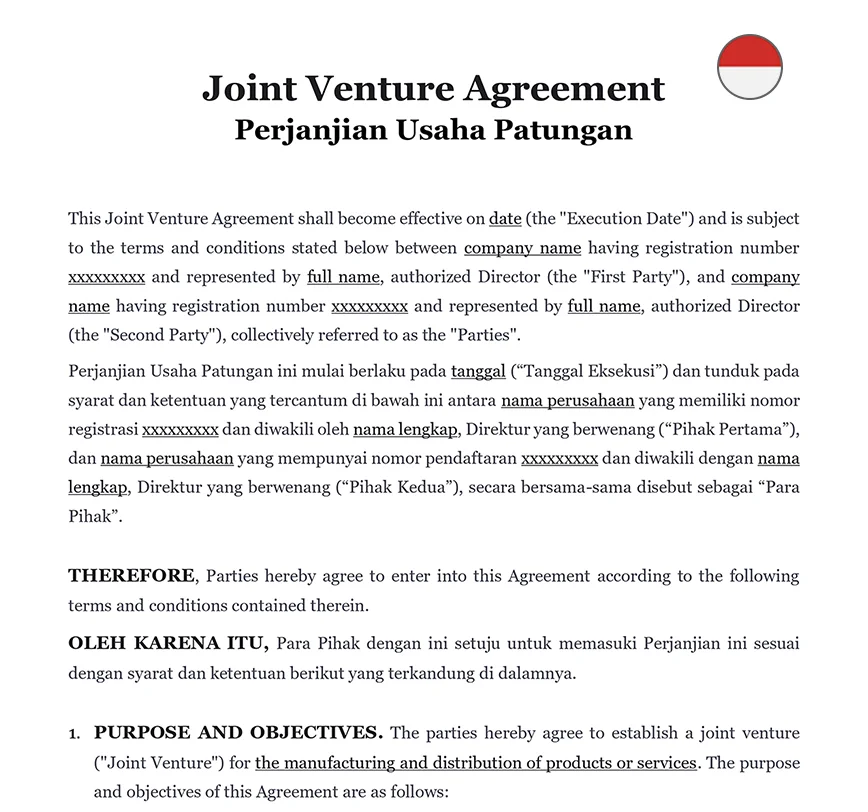
Final Thoughts on Business Collaborations in Indonesia
Entering into a business collaboration in Indonesia can be a highly rewarding strategy if approached with the right legal precautions. Ensure that you understand all legal and financial aspects involved and utilize appropriate resources like our Joint Venture Agreement to secure your collaboration. Engaging with experienced professionals who can provide guidance throughout the process will maximize the benefits of your joint venture or partnership.
Drafting and Reviewing Your Collaboration Agreement
Drafting a comprehensive collaboration agreement is a critical step in formalizing business relationships in Indonesia. This document should clearly outline all terms of the collaboration, including contributions, profit-sharing, management structure, and specific details about the collaboration’s scope. Utilizing a Joint Venture Agreement template can help ensure that all necessary legal elements are covered. Additionally, having the agreement reviewed by a legal expert specializing in Indonesian law can help ensure that it meets all legal requirements and protects both parties involved in the collaboration. Properly drafted agreements help in mitigating risks and ensuring a smooth business partnership.
Completing Your Collaboration Agreement
Successfully completing a collaboration agreement in Indonesia involves careful preparation and execution of legal documents. Ensure that all necessary documents, including the Joint Venture Agreement and Non-Disclosure Agreement, are accurately prepared and reviewed. Working with experienced professionals and ensuring compliance with all legal requirements will facilitate a smooth collaboration process. By taking these steps, you can confidently move forward with your business collaboration in Indonesia, knowing that all legal aspects have been carefully addressed.
Ask your question and receive legal advice from a qualified lawyer
310 client reviews (4.8/5) ⭐⭐⭐⭐⭐