Legal Obligations for Issuing Payment Receipts in Indonesia
Issuing payment receipts is a fundamental aspect of business operations, ensuring transparency, accountability, and legal compliance. In Indonesia, the process of issuing payment receipts is governed by specific regulations, and businesses must adhere to these legal obligations to avoid potential penalties. This guide will cover the essential aspects of issuing payment receipts in Indonesia, highlighting the key legal requirements and best practices. Utilizing a comprehensive General Receipt Template can help streamline this process and ensure compliance.
Key Legal Requirements for Issuing Payment Receipts
1. Complete Information: A legally valid payment receipt in Indonesia must contain complete information, including the payer’s and payee’s names, the date of the transaction, the amount paid, and a detailed description of the goods or services provided.
2. Tax Compliance: Ensure that the payment receipt reflects any applicable taxes, such as VAT (Value Added Tax). The receipt must include the tax amount and the taxpayer’s identification number (NPWP).
3. Sequential Numbering: Payment receipts must be numbered sequentially to maintain a proper record and for easy reference in case of an audit.
4. Signatures and Stamps: The receipt should be signed by the authorized person and, if applicable, stamped with the company’s official seal to authenticate the document.
5. Retention Period: Businesses are required to keep a copy of all payment receipts for a minimum of five years, as they may be needed for tax audits or legal disputes.
6. Electronic Receipts: If issuing electronic receipts, ensure that they comply with Indonesia’s e-commerce regulations, including digital signatures and secure storage.
Best Practices for Issuing Payment Receipts
Issuing payment receipts is not only a legal requirement but also a good business practice that fosters trust and professionalism. Here are some best practices to consider when issuing payment receipts:
| Standardization: Use a standardized template for all receipts to ensure consistency and compliance with legal requirements. |
| Timeliness: Issue receipts promptly after payment is received to avoid any disputes or misunderstandings. |
| Clarity: Ensure that all details on the receipt are clear and legible, particularly the amount paid and the purpose of the payment. |
| Record Keeping: Maintain an organized system for storing copies of all issued receipts, whether in physical or electronic form. |
| Verification: Regularly review your receipt-issuing process to ensure it complies with the latest legal requirements and best practices. |
 Word Document (.docx)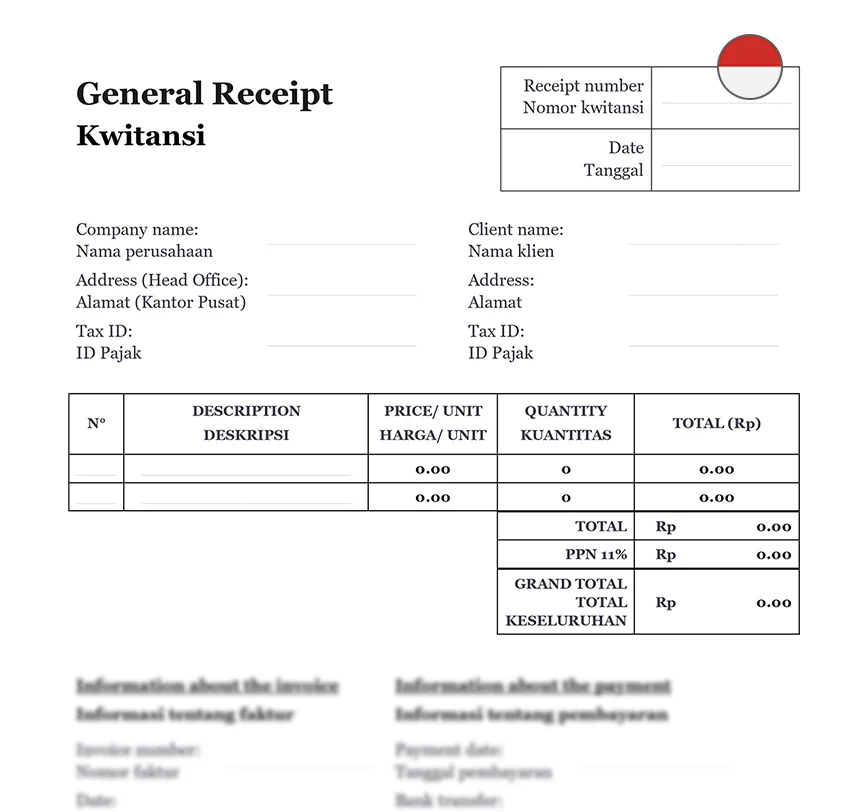
Final Thoughts on Issuing Payment Receipts in Indonesia
Issuing payment receipts is an essential aspect of maintaining transparency and compliance in business transactions in Indonesia. By adhering to the legal requirements and best practices outlined in this guide, businesses can ensure that they are properly documenting payments and safeguarding against potential legal issues. Utilizing a General Receipt Template can provide a reliable and compliant method for issuing receipts, helping your business operate smoothly and efficiently. Engage with legal professionals to review your processes and ensure that all aspects of your receipt issuance are in line with current regulations.
Drafting and Reviewing Payment Receipts
Drafting a comprehensive payment receipt is a critical step in ensuring transparency in business transactions. This document should clearly outline all details of the payment, including the payer, payee, date, amount, and purpose of the payment. It is important to include elements such as tax compliance and sequential numbering to meet legal requirements. Utilizing a general receipt template can help ensure that all necessary legal elements are covered. Additionally, having the receipt reviewed by a legal expert specializing in Indonesian law can help ensure that it meets all legal requirements and protects both parties involved in the transaction. Properly drafted receipts help in mitigating risks and ensuring a smooth transaction process.
Completing Your Payment Receipt
Successfully completing a payment receipt in Indonesia involves careful preparation and execution of legal documents. Ensure that all necessary elements, including the General Receipt and Tax Receipt, are accurately prepared and reviewed. Working with experienced professionals and ensuring compliance with all legal requirements will facilitate a smooth transaction process. By taking these steps, you can confidently move forward with your business operations in Indonesia, knowing that all legal aspects have been carefully addressed.
Ask your question and receive legal advice from a qualified lawyer
310 client reviews (4.8/5) ⭐⭐⭐⭐⭐