Legal Essentials for Hiring Employees in Indonesia
Hiring employees in Indonesia involves navigating a complex landscape of legal requirements. This guide outlines the essential steps to ensure compliance with Indonesian labor laws and best practices, helping you to avoid potential legal pitfalls. Utilizing a well-crafted Employment Contract is crucial to formalize the terms of employment and protect both the employer and the employee.
Understanding Labor Laws in Indonesia
Indonesia’s labor laws are designed to protect employees and ensure fair treatment in the workplace. Key laws include the Manpower Law and regulations issued by the Ministry of Manpower. It’s essential to be familiar with these regulations to avoid non-compliance issues that could result in penalties or disputes.
1. Employment Contracts: All employees in Indonesia should have a written employment contract that clearly outlines their rights, responsibilities, and working conditions. This contract must comply with Indonesian labor laws and should be in the Indonesian language.
2. Minimum Wage: Employers are required to pay at least the minimum wage as determined by regional governments. Failing to meet this requirement can lead to legal consequences.
3. Working Hours and Overtime: The standard working hours in Indonesia are 40 hours per week. Any hours worked beyond this must be compensated as overtime, with specific rates mandated by law.
4. Leave Entitlements: Employees are entitled to various types of leave, including annual leave, sick leave, and maternity leave. It’s important to document these entitlements in the employment contract.
Creating a Legally Compliant Employment Contract
A well-drafted employment contract is crucial for defining the employer-employee relationship and ensuring that both parties are aware of their obligations. Here are the key elements that should be included in an employment contract in Indonesia:
1. Job Description: Clearly define the role, responsibilities, and expectations of the employee to prevent any misunderstandings.
2. Compensation: Outline the salary, benefits, and any other compensation the employee will receive, including bonuses and incentives.
3. Term of Employment: Specify whether the employment is for a fixed term or indefinite, and include any probationary periods.
4. Termination Clause: Detail the conditions under which the employment can be terminated, including notice periods and severance pay.
5. Confidentiality and Non-Compete Clauses: Include clauses to protect sensitive company information and restrict the employee from working with competitors post-employment.
6. Dispute Resolution: Provide a mechanism for resolving any disputes that may arise, such as arbitration or mediation.
Additional Legal Considerations for Employers in Indonesia
In addition to the employment contract, employers in Indonesia must consider several other legal aspects to ensure compliance with local labor laws:
| Work Permits and Visas: If you are hiring foreign workers, ensure that they have the necessary work permits and visas to legally work in Indonesia. |
| Health and Safety: Employers are responsible for providing a safe and healthy work environment. This includes adhering to occupational health and safety standards set by the government. |
| Social Security: Employers must register employees with BPJS (Social Security Administration) for health and employment insurance. Contributions are required to be made by both the employer and the employee. |
| Employee Training: Providing adequate training for employees is not only a legal requirement in some cases, but it also helps in enhancing productivity and compliance with company policies. |
 Word Document (.docx)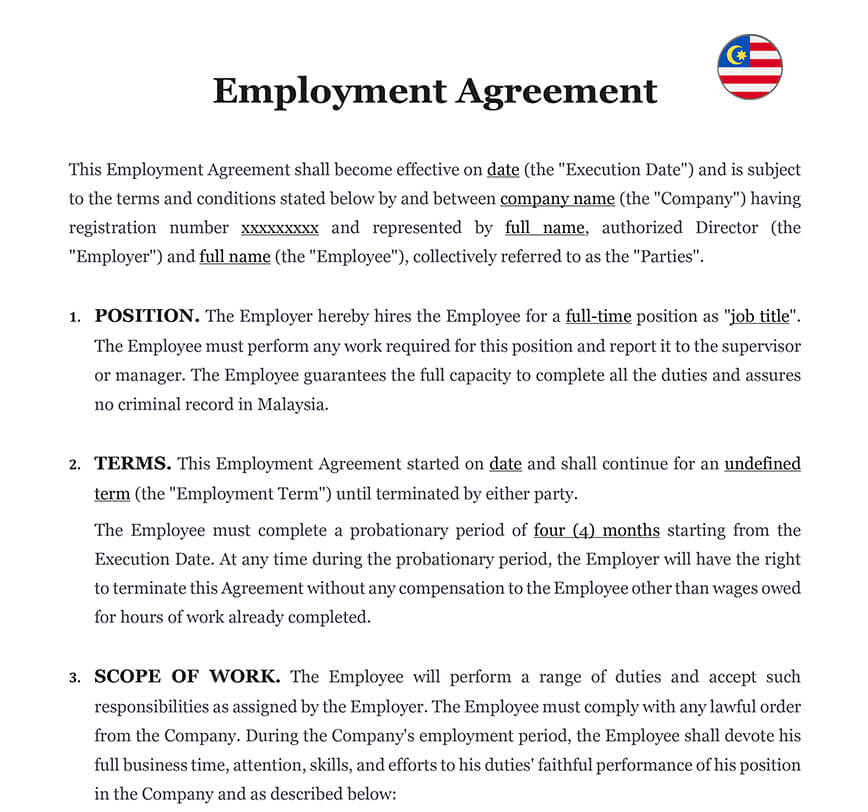
Final Thoughts on Hiring Employees in Indonesia
Hiring employees in Indonesia requires careful attention to legal requirements and best practices. By utilizing a comprehensive employment contract and ensuring compliance with local labor laws, you can create a positive and productive work environment. Engage with legal professionals to help navigate these complexities and secure your business interests.
Drafting and Reviewing Employment Contracts
Drafting a comprehensive employment contract is a critical step in hiring employees. This agreement should clearly outline all terms of employment, including job responsibilities, compensation, and termination conditions. Utilizing a employment contract template can help ensure that all necessary legal elements are covered. Additionally, having the contract reviewed by a legal expert specializing in Indonesian labor law can help ensure that it meets all legal requirements and protects both parties involved in the employment relationship.
Completing Your Employment Contract
Successfully completing an employment contract in Indonesia involves careful preparation and execution of the document. Ensure that all necessary elements, including the employment contract and employee handbook, are accurately prepared and reviewed. Working with experienced professionals and ensuring compliance with all legal requirements will facilitate a smooth hiring process. By taking these steps, you can confidently move forward with your hiring process in Indonesia, knowing that all legal aspects have been carefully addressed.
Ask your question and receive legal advice from a qualified lawyer
310 client reviews (4.8/5) ⭐⭐⭐⭐⭐