How to Legally Terminate Probationary Employees in Indonesia
Terminating an employee during their probationary period can be a necessary step for employers if the individual is not meeting the expected standards. However, it is essential to understand and comply with Indonesia’s legal framework to avoid potential disputes and legal complications. This guide provides a detailed overview of the legal steps required to terminate probationary employees in Indonesia effectively.
Understanding the Probationary Period in Indonesia
In Indonesia, the probationary period is generally used by employers to assess the suitability of new hires for their roles. According to the Manpower Law No. 13 of 2003, the maximum duration of the probationary period is three months. During this time, both the employer and the employee can terminate the employment relationship with minimal notice, provided that specific legal requirements are met.
Key Legal Requirements for Termination
When considering terminating a probationary employee, it is crucial to adhere to the following legal requirements:
1. Written Notification: Ensure that the employee receives a written termination notice. This notice should clearly state the reasons for termination and should be given at least 7 days before the intended termination date.
2. Performance Documentation: Keep detailed records of the employee’s performance during the probationary period. This documentation will be essential if the termination is challenged.
3. Fair Evaluation: Ensure that the decision to terminate is based on a fair and objective evaluation of the employee’s performance. Avoid any discriminatory practices.
4. Compliance with Employment Contracts: Review the employment contract and ensure that any termination procedures outlined in the contract are followed.
5. Final Payment: Calculate and provide any final payments due to the employee, including salary for days worked, unused leave, and any other contractual entitlements.
Common Pitfalls to Avoid
Employers often make mistakes during the termination process that can lead to legal disputes or claims of unfair dismissal. Here are some common pitfalls to avoid:
1. Failure to Document: Not keeping records of the employee’s performance and the reasons for termination can weaken your case if the termination is challenged.
2. Insufficient Notice: Providing insufficient notice or failing to follow the legal notice period can result in claims of wrongful termination.
3. Discrimination Claims: Ensure that the termination decision is based solely on performance and not on discriminatory factors such as race, gender, or religion.
4. Ignoring Contract Terms: Not adhering to the terms outlined in the employment contract can lead to legal complications.
 Word Document (.docx)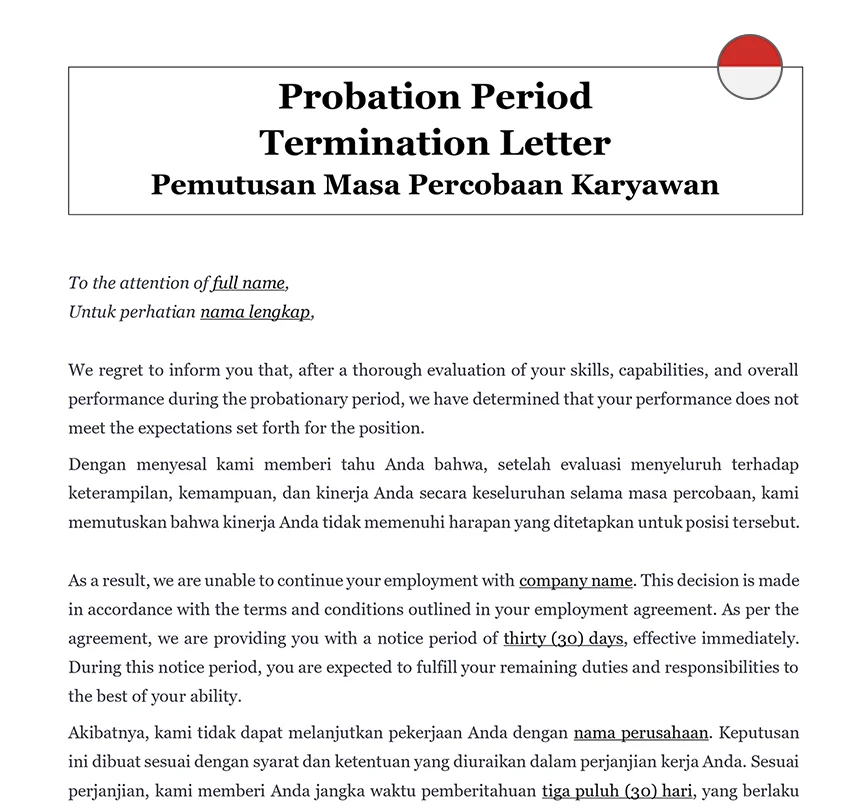
Final Thoughts```html
on Terminating Probationary Employees
Terminating an employee during the probationary period is a sensitive process that requires careful consideration and adherence to legal guidelines. By following the appropriate procedures and documenting the entire process, employers can ensure a smooth termination that minimizes the risk of disputes. Utilizing resources like our Employee Probation Period Termination Template can help in executing this process correctly.
Drafting and Reviewing Termination Letters
Drafting a termination letter is a critical step in the termination process. This document should clearly state the reasons for termination, the effective date, and any final payments due to the employee. It is essential to ensure that the termination letter is compliant with Indonesian labor laws and that it reflects the terms agreed upon in the employment contract. Utilizing a Termination Letter Template can help ensure that all necessary legal elements are covered. Additionally, having the letter reviewed by a legal expert can help prevent potential disputes.
Completing the Termination Process
Successfully completing the termination process involves more than just issuing a termination letter. It includes conducting an exit interview, settling any final payments, and ensuring the return of company property. By taking these steps, you can ensure a smooth transition for both the employee and the company. Additionally, working with experienced professionals and ensuring compliance with all legal requirements will facilitate a smooth termination process. By taking these steps, you can confidently move forward with the termination, knowing that all legal aspects have been carefully addressed.
Ask your question and receive legal advice from a qualified lawyer
310 client reviews (4.8/5) ⭐⭐⭐⭐⭐