Legal Aspects of Working from Home in Indonesia
The rise of remote working has changed the traditional work environment, offering flexibility and new opportunities. However, in Indonesia, it’s important for both employers and employees to understand the legal framework that governs remote work. This guide will explore the key legal aspects of working from home in Indonesia, helping businesses to comply with regulations while protecting their interests. Utilizing a comprehensive Remote Working Contract template can help ensure that all aspects of remote work are legally sound.
Legal Requirements for Remote Working in Indonesia
1. Employment Contracts: Ensure that employment contracts are updated to reflect remote working arrangements. This includes specifying the location of work, working hours, and any changes to job duties or responsibilities.
2. Health and Safety: Employers are responsible for the health and safety of their employees, even when working from home. It’s crucial to establish clear guidelines for setting up a safe home office environment.
3. Data Protection: With remote work, there’s an increased risk of data breaches. Implement strict data protection policies and ensure that employees have the tools and knowledge to protect sensitive company information.
4. Work Hours and Overtime: Clearly define working hours in the remote working contract to avoid disputes over overtime and ensure compliance with labor laws in Indonesia.
5. Tax Implications: Understand the tax implications of remote work for both employers and employees, particularly if employees are working from different regions within Indonesia or from abroad.
6. Dispute Resolution: Include clauses in the remote working contract that outline how disputes related to remote work will be resolved, whether through mediation, arbitration, or another method.
Challenges of Remote Working in Indonesia
While remote working offers many benefits, it also presents challenges, especially in the context of Indonesia:
| Technology and Infrastructure: Not all areas in Indonesia have reliable internet and power infrastructure, which can affect productivity. |
| Communication Barriers: Remote work can lead to communication gaps. It’s important to establish clear communication channels and regular check-ins. |
| Work-Life Balance: Without a clear boundary between work and personal life, employees may struggle with maintaining a healthy work-life balance. |
| Monitoring Performance: Managing and evaluating employee performance remotely requires different tools and approaches compared to traditional office settings. |
 Word Document (.docx)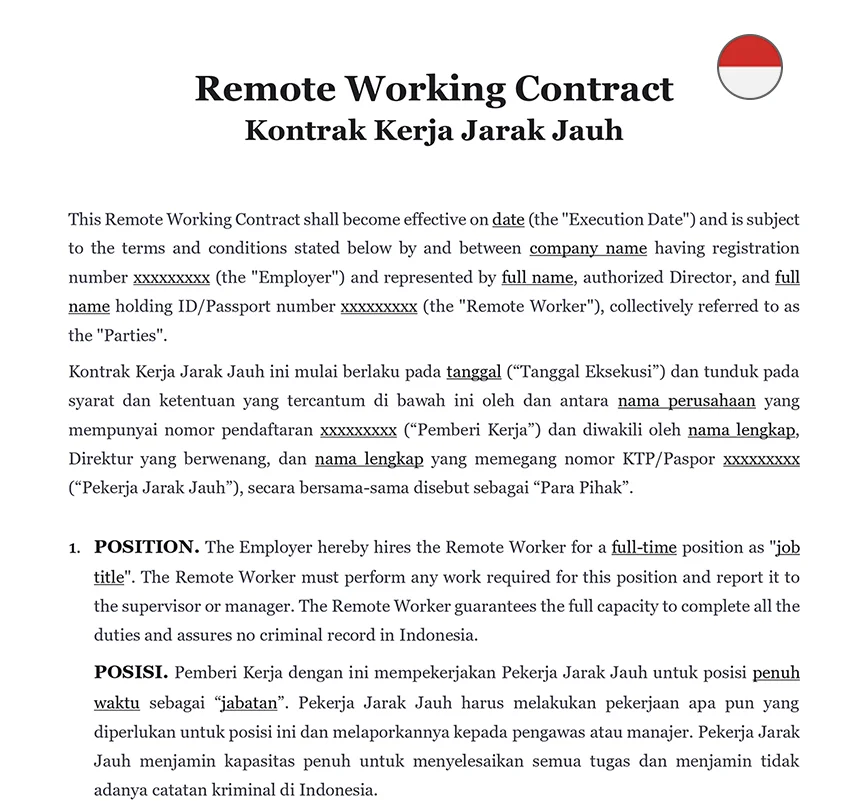
Final Thoughts on Remote Working in Indonesia
As remote working becomes increasingly prevalent, it is essential to address both the opportunities and challenges it presents. A well-drafted Remote Working Contract is critical to ensure that all legal aspects are covered, protecting both employers and employees. By understanding and adhering to the legal requirements, businesses can create a productive and legally compliant remote working environment.
Drafting and Reviewing Remote Working Contracts
Drafting a comprehensive remote working contract is essential for any business that allows employees to work from home. This agreement should clearly outline all terms of the remote work arrangement, including the scope of work, communication protocols, and performance expectations. It is also important to include clauses that address potential issues such as data security and work hours. Utilizing a remote working contract template can help ensure that all necessary legal elements are covered. Additionally, having the agreement reviewed by a legal expert specializing in Indonesian labor law can help ensure that it meets all legal requirements and protects both parties involved in the remote working arrangement. Properly drafted agreements help in mitigating risks and ensuring a smooth and productive remote work environment.
Completing Your Remote Working Contract
Successfully implementing a remote working arrangement in Indonesia involves careful preparation and execution of the contract. Ensure that all necessary documents, including the Remote Working Contract and Employment Contract, are accurately prepared and reviewed. Working with experienced professionals and ensuring compliance with all legal requirements will facilitate a smooth transition to remote work. By taking these steps, you can confidently move forward with your remote working strategy in Indonesia, knowing that all legal aspects have been carefully addressed.
Ask your question and receive legal advice from a qualified lawyer
310 client reviews (4.8/5) ⭐⭐⭐⭐⭐